SAME-DAY SERVICE AVAILABLE
Why 1950s Copper Radiant Floors Leak
Many homes built in Lower Bucks County in the 1950s, including the Levittown houses built between 1952 and 1958, were heated by copper tubing set inside the concrete floor slab. Over decades, contact with the concrete corrodes that copper and opens pinhole leaks in the heating loop. This guide from Leak Detection Bensalem explains why these systems leak and how the leaks are found.
15+
Years Service
500+
Leak Inspections
9+
Communities Served
2400+
Happy Owners

Same-Day Service
same day detections
Licensed Detectors
Warranty Backed
Transparent Pricing
━ WARNING SIGNS
Signs of a Radiant Floor Heating Leak
A radiant floor heating system is a closed loop, so a leak shows up at the boiler and in the floor rather than on the water bill.
- Falling Boiler Pressure: The pressure gauge on the boiler drops between checks, and the system needs refilling to keep running.
- Makeup Water Running Often: The automatic fill valve adds water to the loop repeatedly to replace what the leak loses.
- Cold Rooms or Cold Zones: One room or zone stops heating evenly because water and pressure escape from its tubing.
- Warm or Damp Spots on the Floor: Hot water escaping from the tubing warms or dampens one area of the floor.
- Rust or Mineral Buildup at the Boiler: Constant fresh makeup water brings new oxygen and minerals into the system.
These signs call for radiant heating leak detection before the boiler or the floor suffers further damage.
Same-Day Appointments
Licensed & Experienced Specialists
Warranty-Backed Work
Upfront Flat-Rate Pricing
15+
YEARS
EXPERIENCE
500+
Leak Inspections
90+
━ WHY THEY LEAK
Why Copper Radiant Tubing Fails
Copper radiant tubing in a concrete slab faces conditions that wear the pipe from the outside in.
Corrosion From the Concrete
Chemicals and moisture in the concrete attack the outside of the copper tubing and thin the pipe wall over time.
Contact With Steel Reinforcement
Copper tubing that touches steel mesh or rebar in the slab can corrode faster where the two metals meet.
Age of the System
Tubing installed in the 1950s has now been in the slab for about 70 years, and decades of heating cycles and corrosion leave the pipe walls thin.
Slab Movement and Cracks
Settling and cracks in the slab put stress on the tubing and can open leaks at bends and joints.
━ HOW IT WORKS
How Radiant Floor Leaks Are Found
Leak Detection Bensalem locates radiant floor leaks with a step-by-step process that works without breaking up the floor.
01
Confirm the Pressure Loss
The technician isolates the boiler and the heating loop and confirms that the system loses pressure over time.
02
Isolate the Zones
Closing the valves for each zone shows which section of tubing holds the leak.
03
Heat the Affected Zone
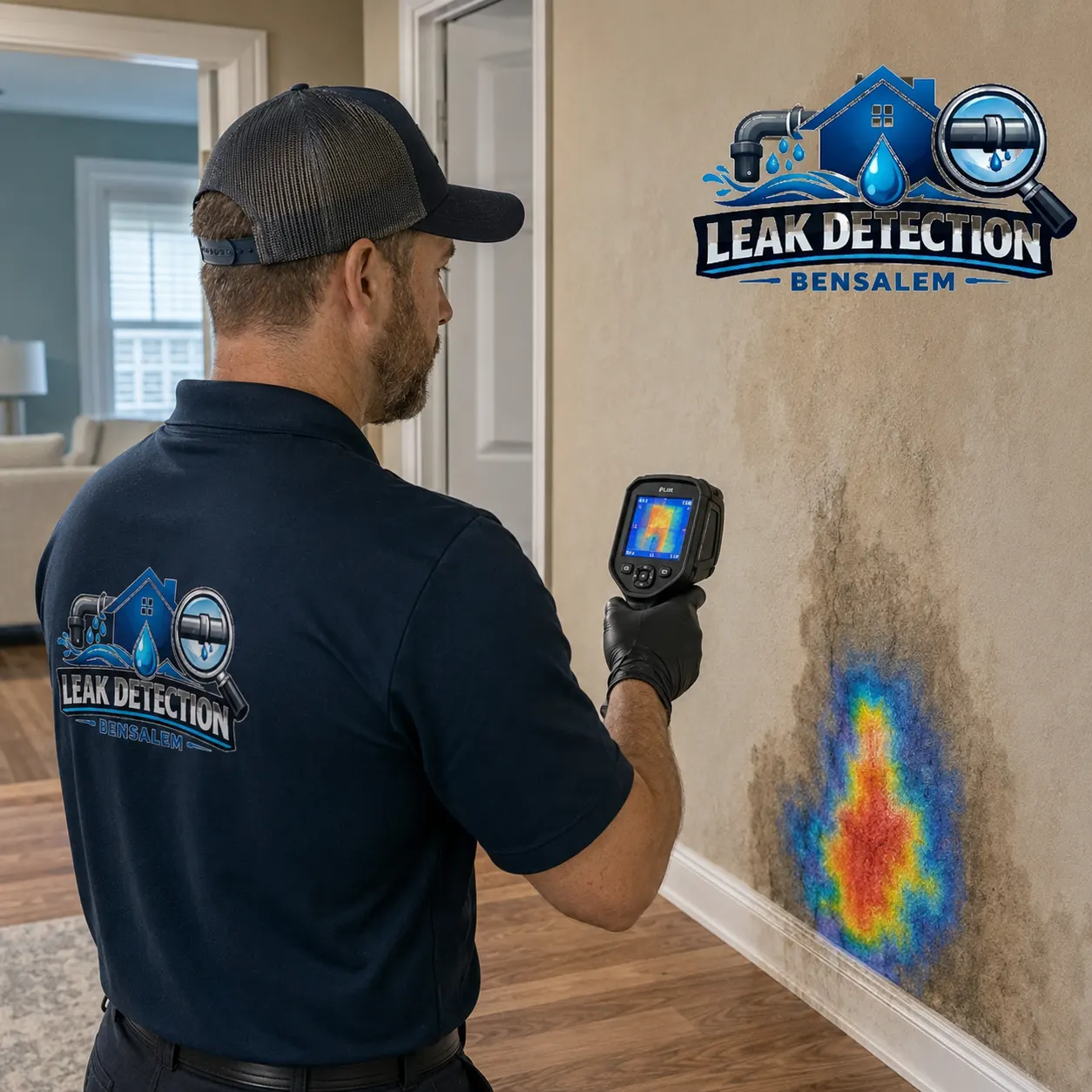
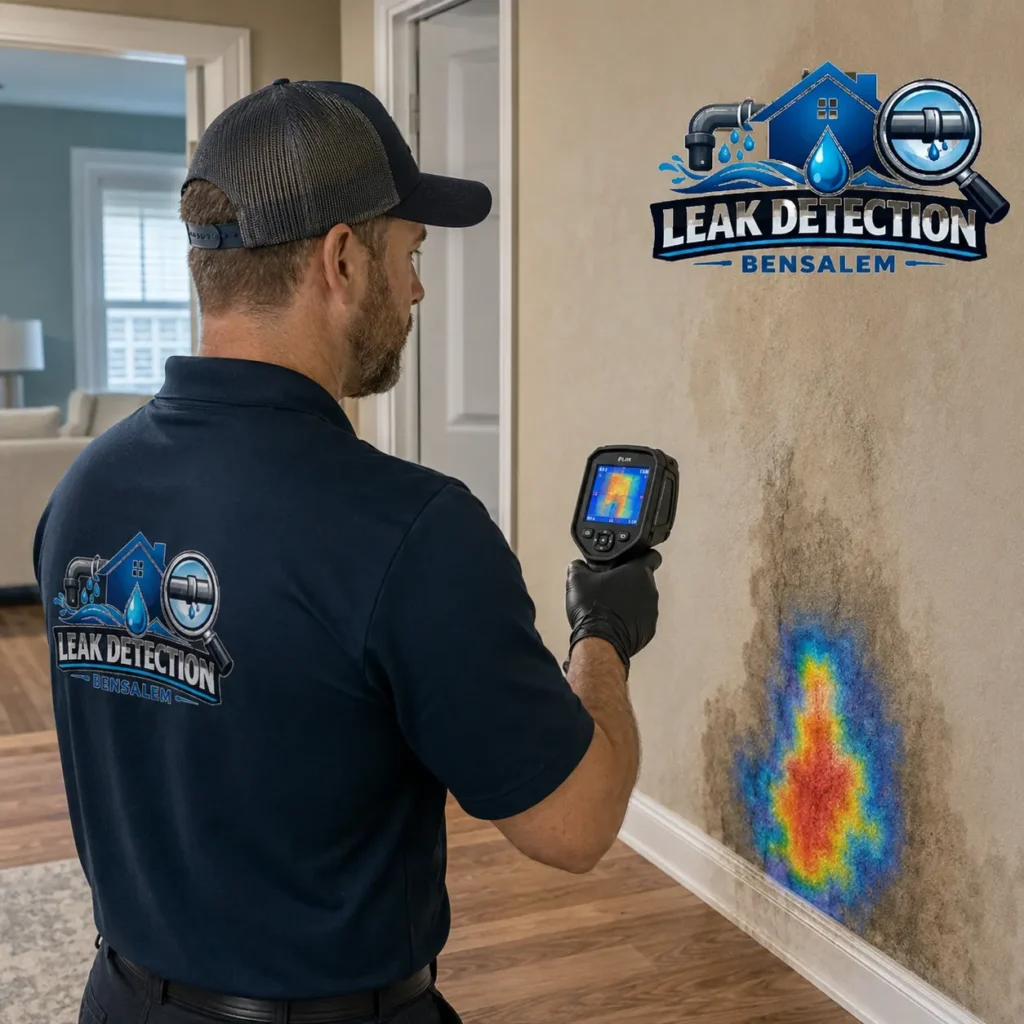
Running hot water through the leaking zone makes the tubing and any escaping water visible to thermal imaging.
04
Scan the Floor
A thermal imaging camera maps the tubing pattern in the floor and shows the spot where heat spreads beyond the tube.
05
Mark the Leak Location
The technician marks the leak location so the repair can target one small area of the slab.
━ REPAIR OPTIONS
Options After a Radiant Floor Leak Is Found
The right option depends on the condition of the tubing and the number of leaks.
Spot Repair of the Tubing
A single leak in otherwise sound tubing can be repaired through a small opening in the slab.
Isolating a Failed Zone
A zone with repeated leaks can be shut off from the system while the other zones keep heating.
New Heat for an Abandoned Zone
Rooms served by an abandoned radiant zone can be heated with baseboard or wall-mounted radiators.
Replacing the Radiant System
A system with widespread corrosion can need new tubing or a new heating method for the whole home.
Why Radiant Floor Leaks Need Prompt Attention
A leaking radiant loop keeps drawing fresh water into the boiler, and that fresh water adds oxygen and minerals that speed up corrosion in the boiler and the remaining tubing. The leak also releases hot water into the slab and the soil below.
Locating the leak early gives the homeowner the most repair options. Homeowners with an older radiant floor can schedule radiant heating leak detection before the next heating season.
━ Common Issues
Frequently Asked Questions
These answers cover common questions about leaks in older copper radiant floor systems.
Still Have Questions?
How do I know if my radiant floor heating has a leak?
A boiler pressure gauge that keeps dropping, an automatic fill valve that runs often, and cold zones are the most common signs of a radiant floor leak.
Can copper radiant tubing in concrete be repaired?
Yes. A single leak can be repaired through a small opening in the slab once the leak is located. Tubing with widespread corrosion is often isolated or replaced instead.
Can thermal imaging find a radiant floor leak?
Yes. Hot water flowing through the tubing shows the tube pattern on a thermal camera, and escaping hot water creates a heat spread that marks the leak.
Why do old copper radiant floors leak more over time?
Corrosion thins the copper walls along the whole loop, so a system that leaks once often develops more leaks in other sections.
Is a radiant heating leak the same as a slab leak?
No. A radiant heating leak comes from the closed heating loop, while a slab leak comes from the domestic water lines under the floor. Both sit under the concrete, and slab leak detection covers the water supply lines.
NEED PROFESSIONAL LEAK DETECTION?
Locate the Leak in Your Radiant Floor
A dropping boiler gauge confirms a radiant loop leak but not its location. Leak Detection Bensalem traces the tubing and pinpoints the leak so the repair stays small. Call (877) 540-5737, Monday to Sunday from 8 AM to 8 PM, or book online to request your inspection.