SAME-DAY SERVICE AVAILABLE
How Professional Leak Detection Works
Professional leak detection confirms that a plumbing system is losing water and then pinpoints the leak without opening walls, floors, or yards first. Technicians combine water meter testing, isolation testing, acoustic listening, thermal imaging, and moisture testing to narrow the search to one exact location. This guide from Leak Detection Bensalem explains each method.
15+
Years Service
500+
Leak Inspections
9+
Communities Served
2400+
Happy Owners
Same-Day Service
same day detections
Licensed Detectors
Warranty Backed
Transparent Pricing
━ THE BASICS
What Professional Leak Detection Includes
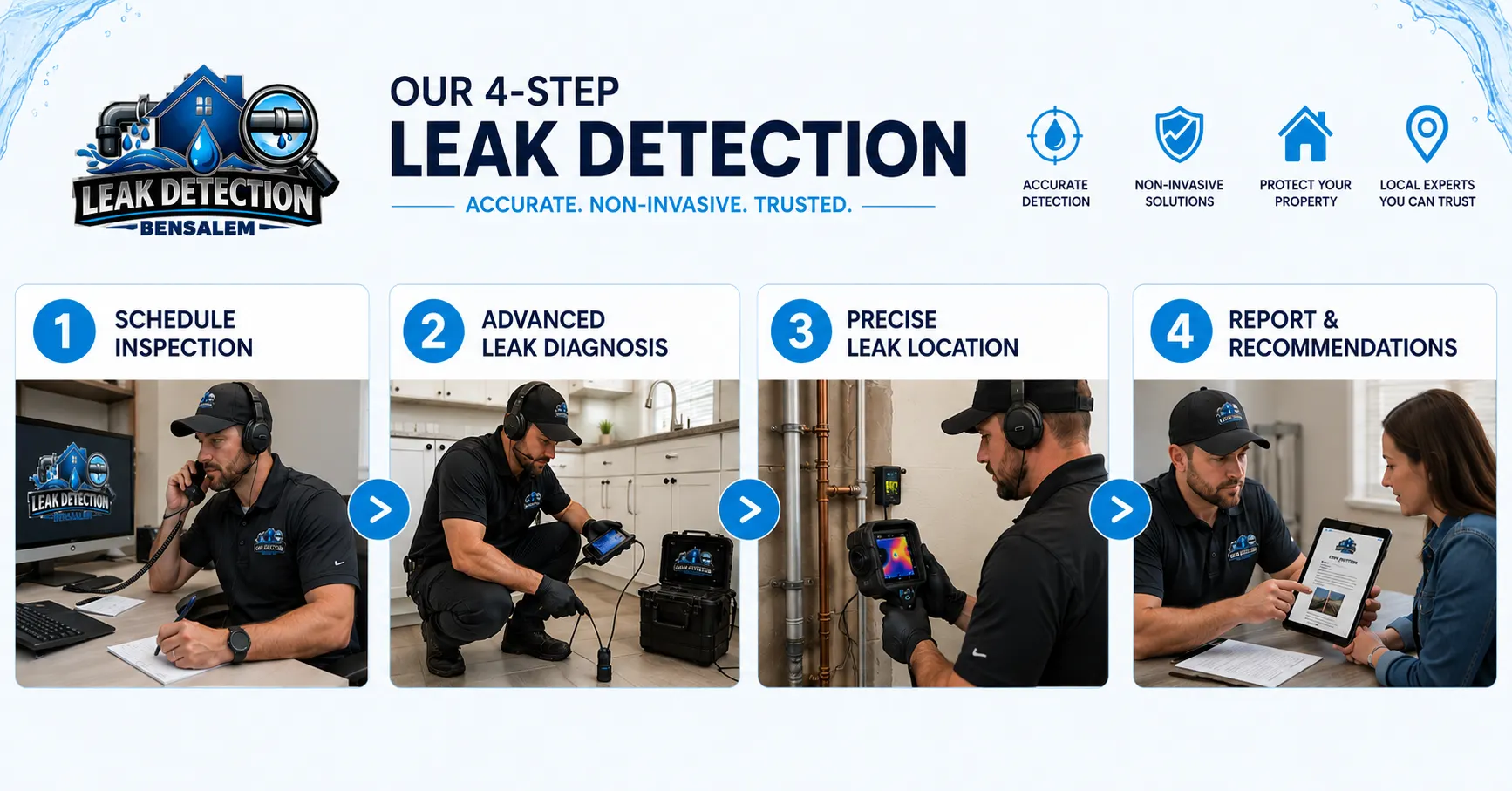
A professional leak inspection answers three questions in order: whether a leak exists, which part of the system is leaking, and exactly where the leak is.
- Leak Confirmation: Meter readings and pressure tests confirm that water is escaping from the plumbing.
- System Isolation: Valves separate the service line, the interior supply lines, and the fixtures so the leak can be narrowed to one section.
- Leak Location: Acoustic, thermal, and moisture tools pinpoint the leak inside the section that is losing water.
- Findings Review: The technician explains the location, the cause, and the repair options.
Leak Detection Bensalem applies this process to slab leaks, wall leaks, and underground water line leaks.
Same-Day Appointments
Licensed & Experienced Specialists
Warranty-Backed Work
Upfront Flat-Rate Pricing
15+
YEARS
EXPERIENCE
500+
Leak Inspections
90+
━ DETECTION METHODS
The Main Leak Detection Methods
Each method detects a different physical sign of a leak.
Acoustic Leak Detection
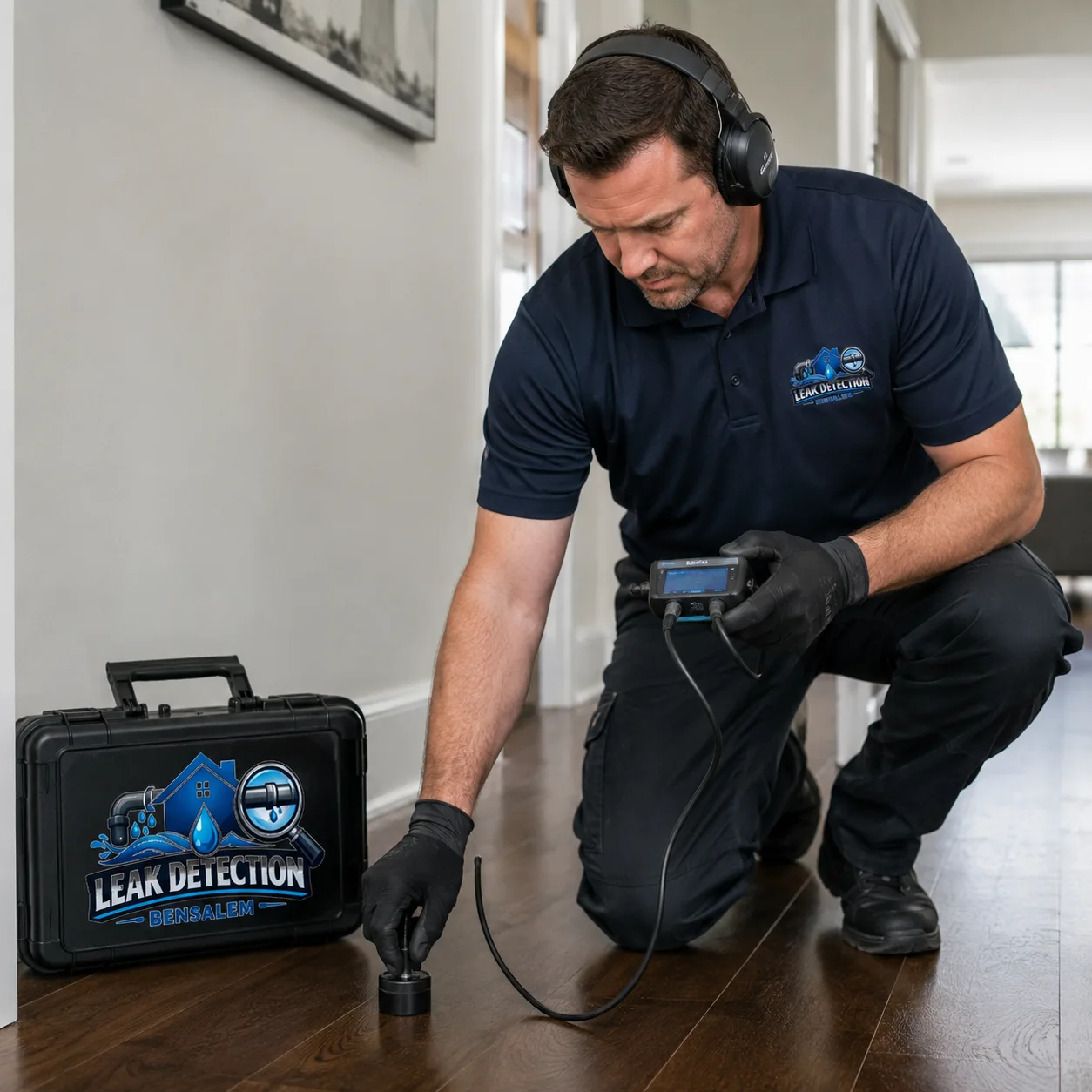
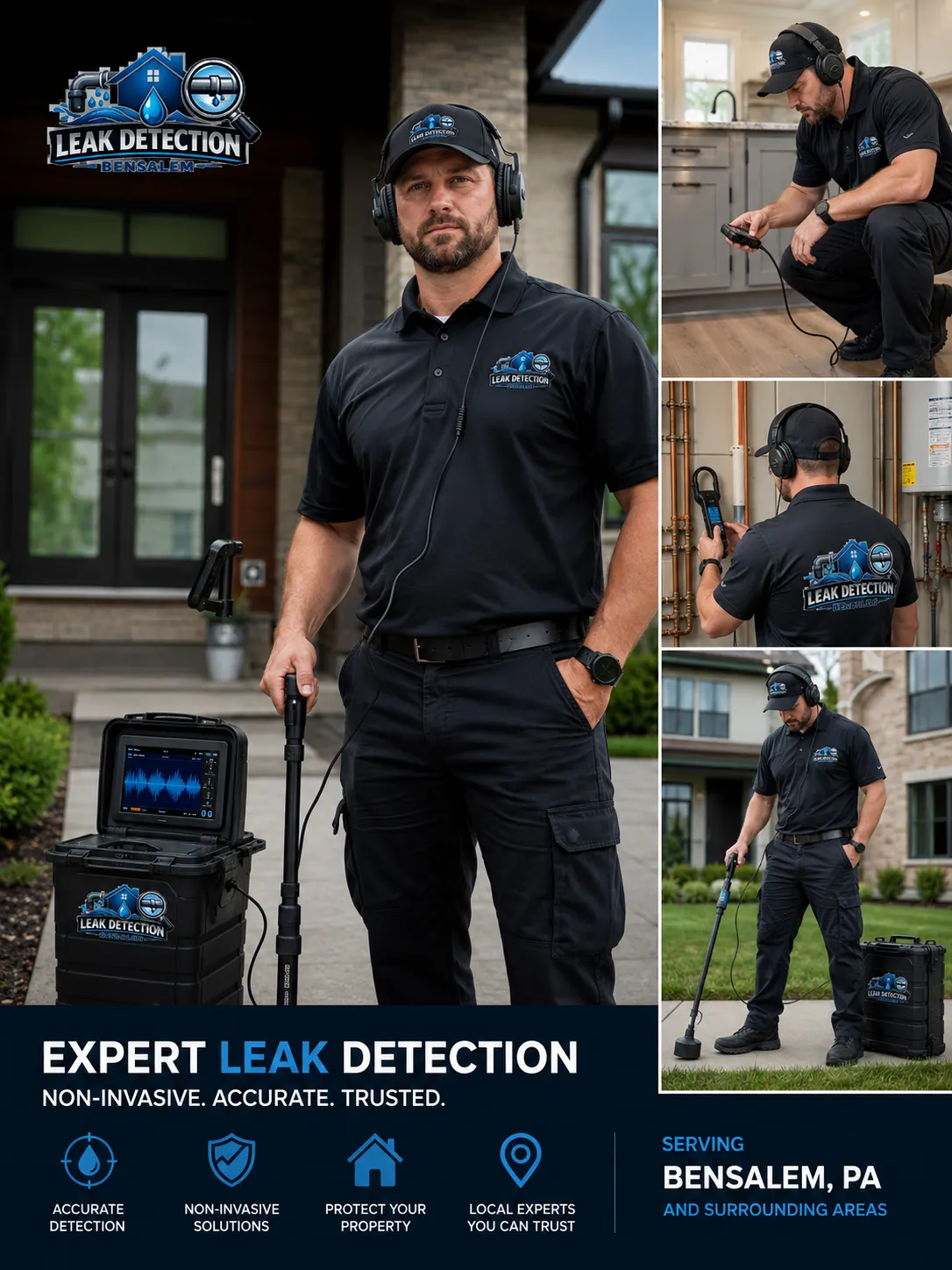
Acoustic equipment amplifies the sound of pressurized water escaping from a pipe, and the sound is loudest near the leak.
Thermal Imaging
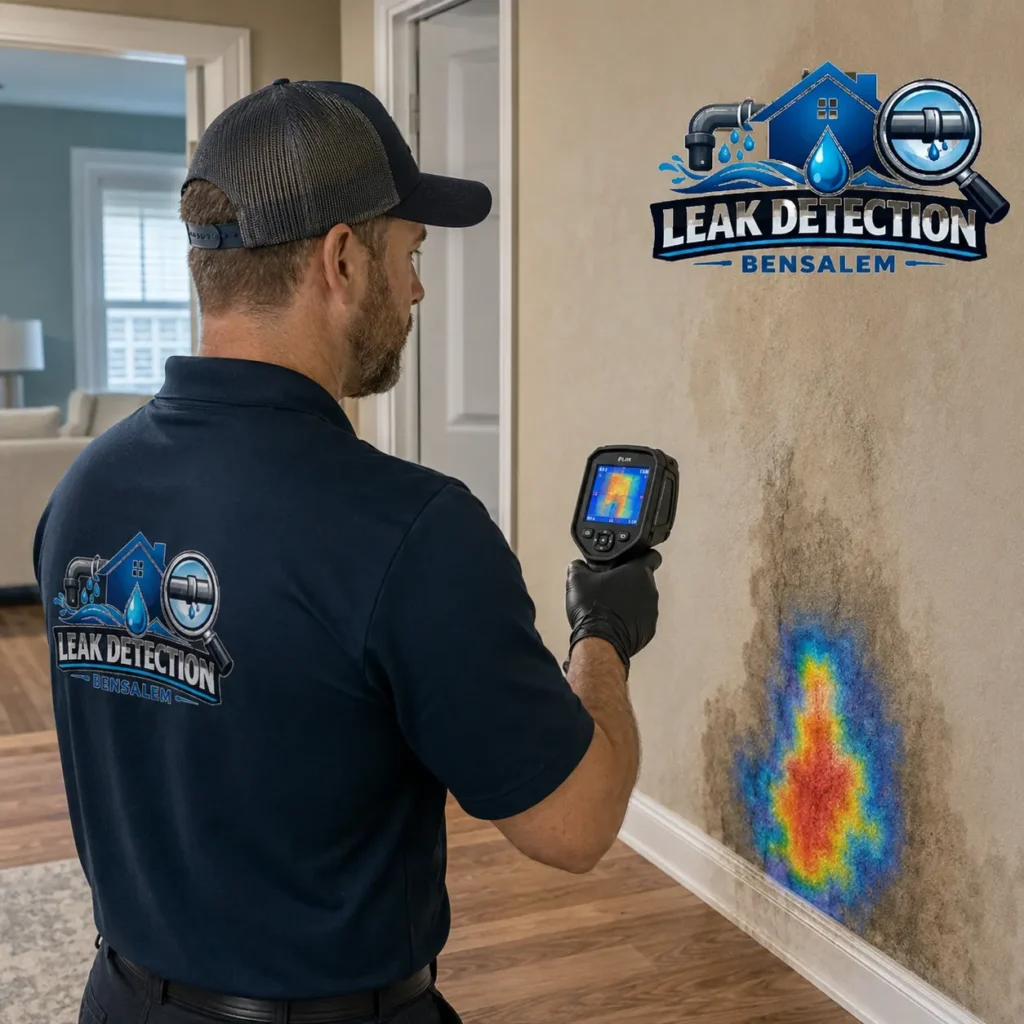
Thermal cameras show temperature differences on surfaces, which reveal wet areas and the path of hot water lines.
Moisture Testing
Moisture meters measure the water content of drywall, wood, and concrete and outline the wet area around a leak.
Pressure and Isolation Testing
Pressure gauges and closed valves show whether a pipe section holds pressure, which confirms the leaking section.
━ STEP BY STEP
A Typical Leak Detection Inspection
Most residential inspections follow these five steps.
01
Symptom Review
The technician reviews the signs, the water bill, and the history of the home.
02
Water Loss Testing
Meter and pressure tests confirm that water is leaving the system and show how fast.
03
System Isolation
Closing valves separates each part of the plumbing to find the leaking section.
04
Leak Location
Acoustic, thermal, and moisture tools pinpoint the leak within that section.
05
Findings Review
The technician marks the location and explains the repair options.
━ CHOOSING THE METHOD
Which Method Finds Which Leak
The location of the suspected leak decides which methods lead the search.
Leaks Under Concrete Slabs
Acoustic listening and pressure isolation lead the search, and thermal imaging helps trace hot water lines.
Leaks Inside Walls and Ceilings
Thermal imaging and moisture testing lead the search, and fixture testing finds drain leaks that appear only during use.
Leaks in Underground Service Lines
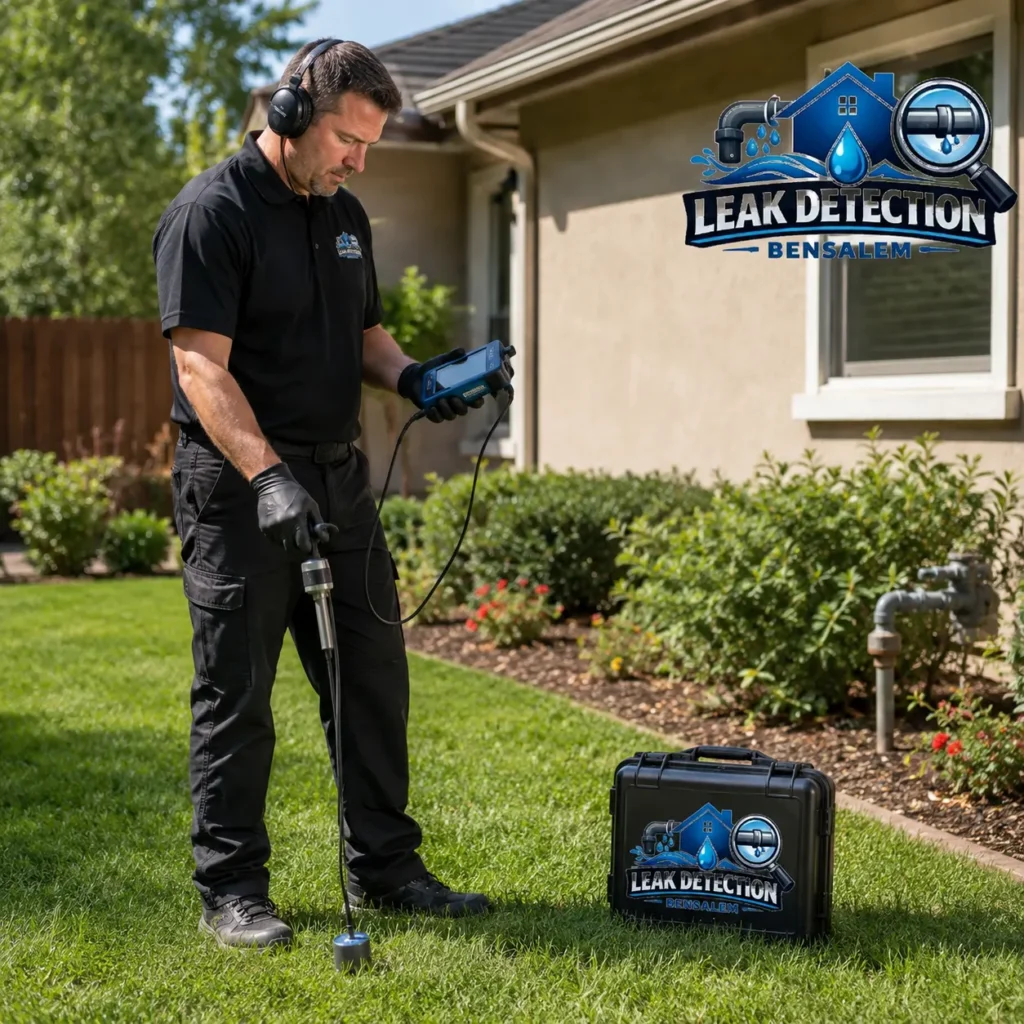
Pipe locating and acoustic listening lead the search along the buried route of the line.
Leaks in Radiant Heating Loops
Zone isolation and thermal imaging lead the search while hot water runs through the tubing.
Why Non-Invasive Leak Detection Matters
Non-invasive leak detection finds the leak before any wall, floor, or yard is opened. Exploratory demolition without a confirmed location can damage finished surfaces and still miss the leak.
A confirmed location keeps the repair small and the cost predictable. Our guide to leak detection cost explains what affects the price of an inspection.
━ Common Issues
Frequently Asked Questions
These answers cover common questions about how professionals find leaks.
Still Have Questions?
How do professionals detect a water leak?
Professionals confirm water loss with meter and pressure tests, isolate the leaking section with valves, and then pinpoint the leak with acoustic equipment, thermal imaging, and moisture meters.
Why do professionals combine several methods?
Each method detects a different sign of a leak, so combining methods lets each result confirm the others and narrows the search to one location.
Does leak detection damage my home?
No. Leak detection methods work from the surface, so walls, floors, and yards stay closed until the leak location is confirmed.
Can leak detection find very small leaks?
Yes. Water meters record very small flows, and acoustic and thermal tools can locate small leaks once the leaking section is isolated.
What is the difference between leak detection and leak repair?
Leak detection finds and confirms the exact leak location, and leak repair fixes the pipe at that location. Accurate detection keeps the repair small.
NEED PROFESSIONAL LEAK DETECTION?
Schedule Professional Leak Detection
Non-invasive methods find the leak before anything is opened. Leak Detection Bensalem confirms the leak, pinpoints its location, and explains the next step clearly. Call (877) 540-5737, Monday to Sunday from 8 AM to 8 PM, or book online to request your inspection.