SAME-DAY SERVICE AVAILABLE
Signs of a Hidden Water Leak in Your Home
A hidden water leak shows itself through small changes before visible damage appears: a water meter that moves with every fixture off, a water bill that rises without more use, musty odors, and stains or warped materials on walls, ceilings, and floors. This guide from Leak Detection Bensalem explains each sign and what it usually means.
15+
Years Service
500+
Leak Inspections
9+
Communities Served
2400+
Happy Owners

Same-Day Service
same day detections
Licensed Detectors
Warranty Backed
Transparent Pricing
━ WARNING SIGNS
The Most Common Signs of a Hidden Water Leak
Hidden leaks develop inside walls, under floors, above ceilings, and along buried pipes. The signs below appear in most homes before a leak becomes obvious.
- Water Meter Movement: The low-flow indicator on the water meter turns while every faucet, toilet, and appliance is off.
- Rising Water Bills: The water bill increases even though household water use stays the same.
- Musty Odors: Damp drywall, insulation, and wood produce a musty smell that stays in one area of the home.
- Stains and Discoloration: Brown or yellow stains appear on ceilings and walls, and dark spots appear on floors.
- Warped or Damaged Materials: Paint bubbles, baseboards swell, and wood or laminate floors cup or buckle.
- Warm Spots on Floors: A hot water pipe leaking under a concrete slab warms the floor above it.
- Sound of Running Water: Water can be heard moving inside walls or floors when nothing is running.
A home that shows two or more of these signs needs professional water leak detection to confirm the leak and find its source.
Same-Day Appointments
Licensed & Experienced Specialists
Warranty-Backed Work
Upfront Flat-Rate Pricing
15+
YEARS
EXPERIENCE
500+
Leak Inspections
90+
━ WHERE LEAKS HIDE
Where Hidden Leaks Usually Develop
The location of a hidden leak shapes the signs it produces. Each area below creates a distinct pattern.
Inside Walls
Supply and drain pipes inside walls leak into the wall cavity and cause bubbling paint, swollen baseboards, and musty odors. Wall leak detection locates these leaks without opening the whole wall.
Above Ceilings
Toilets, tubs, showers, and pipes on the floor above leak into the ceiling below and cause stains and sagging drywall. Ceiling leak detection traces the stain to its source.
Under Concrete Slabs
Pipes under a concrete slab leak into the soil below the home and cause warm floor spots and cracked tile. Slab leak detection pinpoints these leaks under the floor.
Along the Service Line
The buried water line between the curb and the house leaks into the yard and causes soggy soil and high bills. Underground leak detection finds these leaks before any digging.
━ HOW TO CHECK
How to Check Your Home for a Hidden Leak
Homeowners can confirm many hidden leaks with a simple check before calling a professional.
01
Turn Off Every Fixture
Shut off all faucets, showers, and appliances, and make sure no toilet is refilling.
02
Read the Water Meter
Look at the low-flow indicator on the water meter and write down the meter reading.
03
Wait and Read Again
Leave all water off for one to two hours, then read the meter again and compare the numbers.
04
Test the Toilets
Add a few drops of food coloring to each toilet tank and wait 10 minutes. Color in the bowl means the flapper is leaking.
05
Schedule Leak Detection
A meter that moves when no toilet is leaking confirms a hidden leak, and a professional inspection finds its location.
━ HOW PROFESSIONALS FIND LEAKS
How Professionals Find Hidden Leaks
Leak Detection Bensalem uses non-invasive methods that locate hidden leaks without opening walls or floors first.
Acoustic Leak Detection
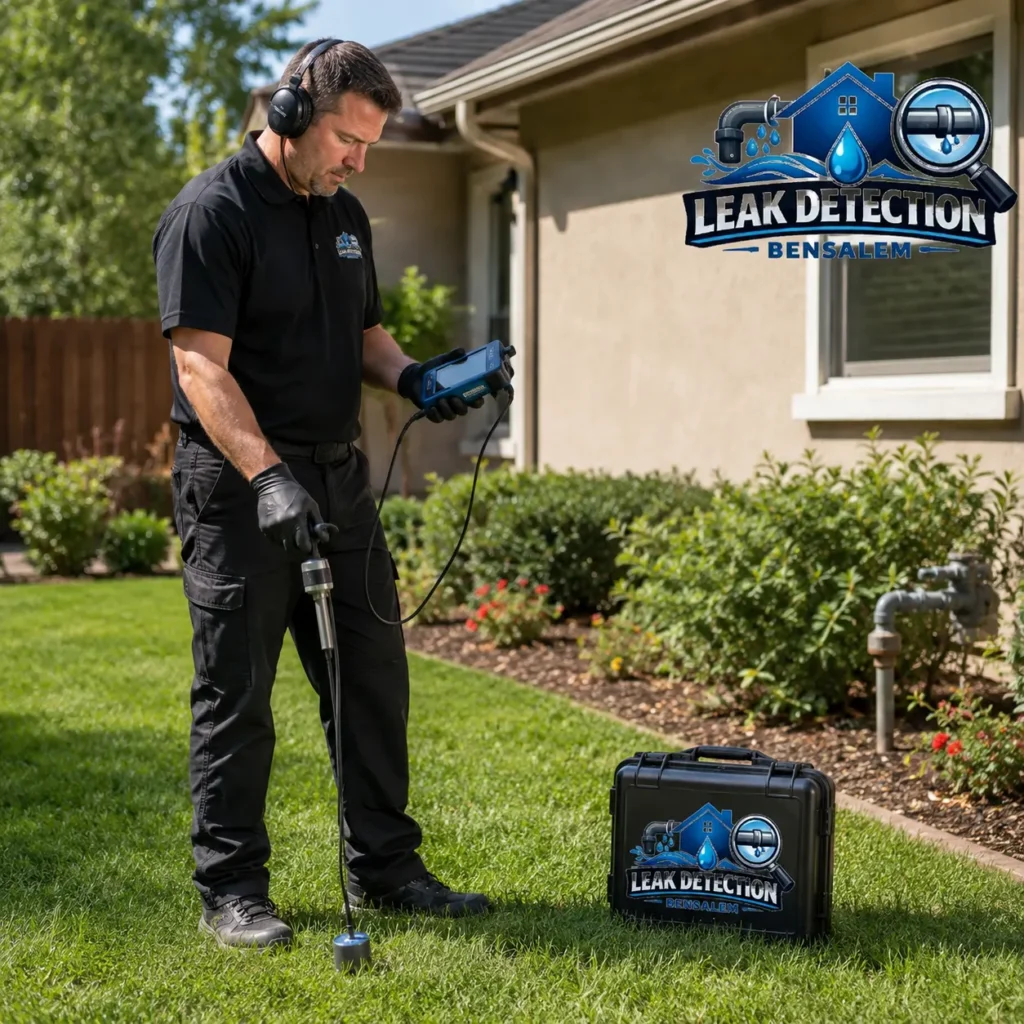
Acoustic equipment amplifies the sound of water escaping from pressurized pipes behind walls, under floors, and underground.
Thermal Imaging
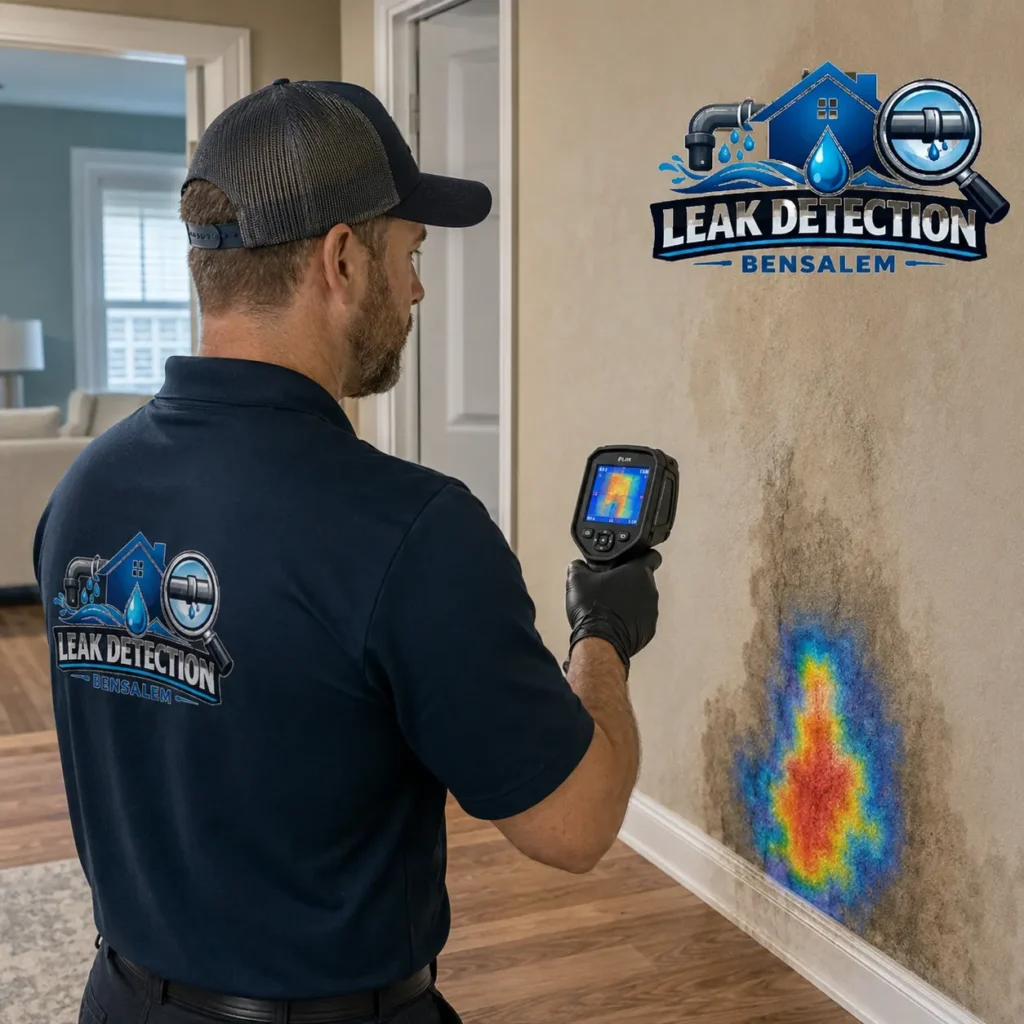
Thermal imaging shows temperature differences on walls, ceilings, and floors that reveal wet areas and hot water leaks.
Moisture Testing
Moisture meters measure water in drywall, wood, and concrete and outline how far a leak has spread.
Isolation Testing
Isolation testing separates sections of the plumbing and confirms which part of the system is losing water.
Why Hidden Leaks Need Early Attention
A hidden leak keeps building materials wet for as long as it runs. Constant moisture weakens drywall and wood, damages flooring, and creates the conditions for mold growth.
Early detection keeps the repair small and the water bill under control. Our guide to how professional leak detection works explains each inspection method in detail.
━ Common Issues
Frequently Asked Questions
These answers cover common questions about hidden water leaks in Bensalem homes.
Still Have Questions?
How can I tell if I have a hidden water leak?
The clearest sign is a water meter that moves while every fixture in the home is off. Musty odors, stains, warped materials, and a rising water bill are other common signs. Our water meter leak test guide explains the check step by step.
Can a hidden leak raise my water bill?
Yes. Every gallon that escapes from a pressurized pipe passes through the water meter first, so a hidden leak raises the bill even when no water is visible.
Can a hidden leak cause mold?
Yes. A hidden leak keeps drywall, insulation, and wood damp, and constant moisture creates the conditions mold needs to grow.
Do hidden leaks always come from supply pipes?
No. Hidden leaks also come from drain lines, toilet seals, shower pans, and air conditioning condensate lines. Drain-side leaks appear only when water runs, while supply leaks continue at all times.
Do I need to open walls to find a hidden leak?
No. Non-invasive methods locate the leak first, so any opening is small and placed directly over the problem.
NEED PROFESSIONAL LEAK DETECTION?
Confirm and Locate Your Hidden Leak
The signs of a hidden leak confirm that water is escaping, but they rarely show where. Leak Detection Bensalem locates the leak so the repair starts in the right place. Call (877) 540-5737, Monday to Sunday from 8 AM to 8 PM, or book online to request your inspection.